


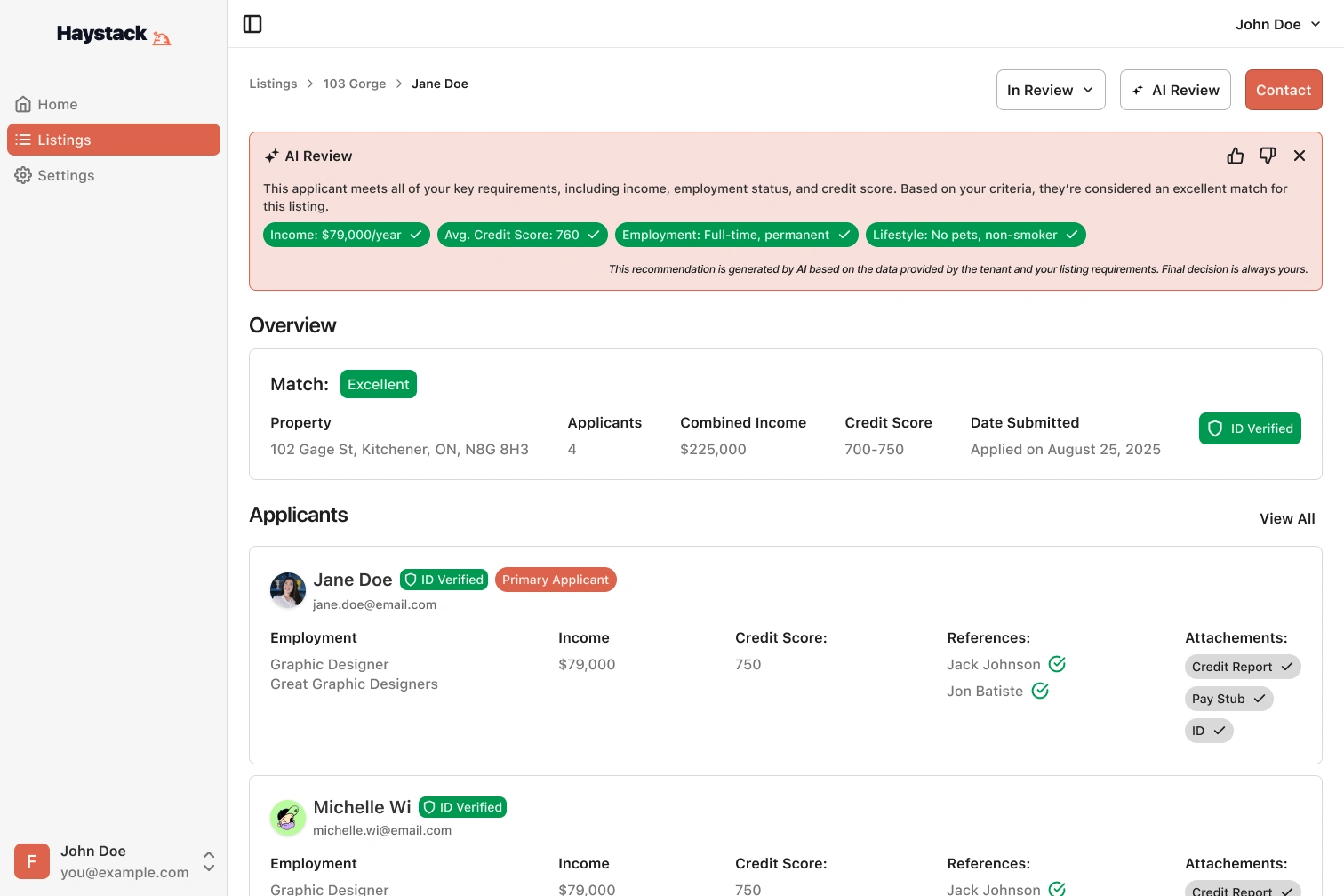
Haystack is a SaaS platform that helps tenants find housing faster and enables landlords to confidently select quality tenants with less effort.
Origin
Haystack was founded by landlords who experienced firsthand how broken the tenant application process had become. Platforms like Facebook Marketplace and Kijiji optimize for volume, not quality, leaving landlords overwhelmed with unqualified applicants and tenants exposed to scams and unsafe data sharing.
In Ontario, this risk is amplified by tenant protection laws that make removing bad tenants costly and time-consuming. The founders set out to create a more structured, trustworthy way to screen tenants before a lease is signed.
Problem Solved
For landlords, tenant screening is high-risk and cognitively heavy. They manually collect documents, compare applicants using spreadsheets, and rely on gut checks for decisions that can have long-term financial and emotional consequences. “The cost of a bad tenant isn’t missed rent. It’s months of stress, legal risk, and irreversible damage.”
For tenants, applying to rentals often means repeatedly sharing sensitive information with strangers through informal channels, with little confidence in legitimacy or fairness.
Existing tools prioritize listings and exposure, but fail to support trust, verification, and explainable decision-making for either side.
How It Works
Haystack is a rental management platform built around the most fragile moment in the lifecycle: screening.
Landlords create structured listings with clear requirements and receive standardized applications. Tenants build secure, reusable profiles they can confidently share. Applicants are reviewed side by side using structured comparisons and explainable AI guidance, reducing manual effort while preserving human judgment.
My Role
Lead Designer
I owned the product design end to end. That included framing the problem, leading research, defining the MVP strategy, designing workflows and interfaces, validating solutions with users, and preparing detailed handoff materials for development.
Team
Founder & Engineering Lead
Timeline
April 2025 - Present
Outcome
Validated MVP with strong landlord and tenant buy-in. Multiple landlords stated they would list properties immediately upon launch, including one managing over 20 student rentals. The product is currently in active development using AI-assisted tooling.
Context and Constraints
Haystack was founded by landlords who had lived this problem. In Ontario, tenant protection laws significantly increase the cost of selecting the wrong applicant, raising the stakes of screening decisions.
8 to 12 weeks to design and validate an MVP
Lean, founder-funded startup
One designer, two founders, one developer
Early use of AI-assisted development tools such as Cursor and Figma Make
Through early workshops and user research, a broad and emotionally charged problem became a clearly defined screening challenge shaped by risk, uncertainty, and poor signals on both sides of the market.
Creating Alignment
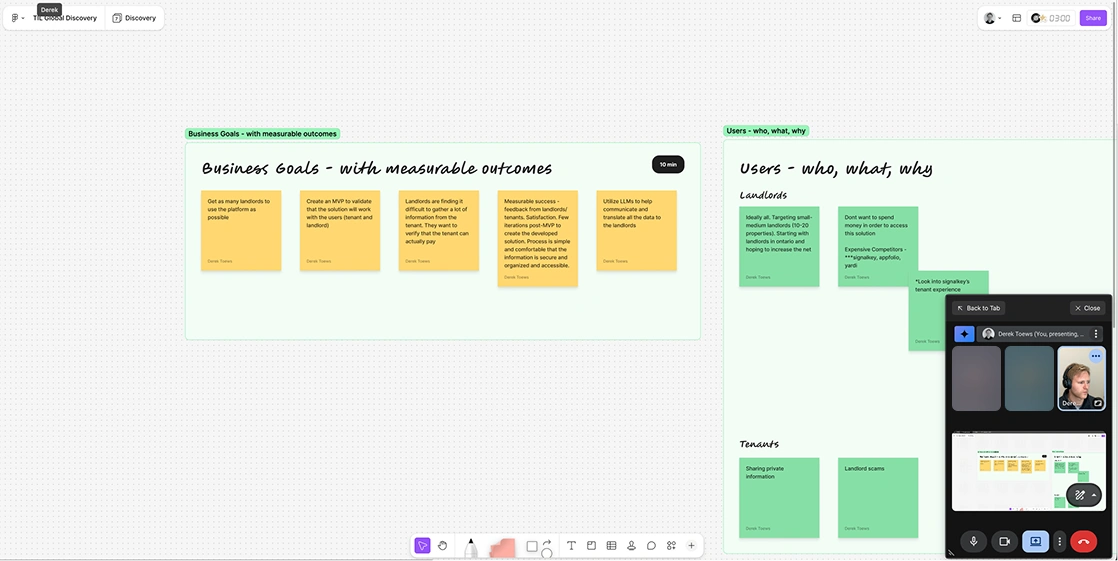
In the first week, I facilitated a structured discovery workshop with the founders using a UX questionnaire framework adapted from The User Experience Team of One by Leah Buley. The goal was alignment, not solutions.
We aligned on business goals, primary users, existing workflows, decision risks, and the scenarios the product needed to support. This created a shared understanding of what success looked like for an initial MVP and allowed the team to move forward with focus instead of opinion.
User Research
Research revealed that landlords were not trying to find the “perfect” tenant. They were trying to reduce risk and mental overhead.
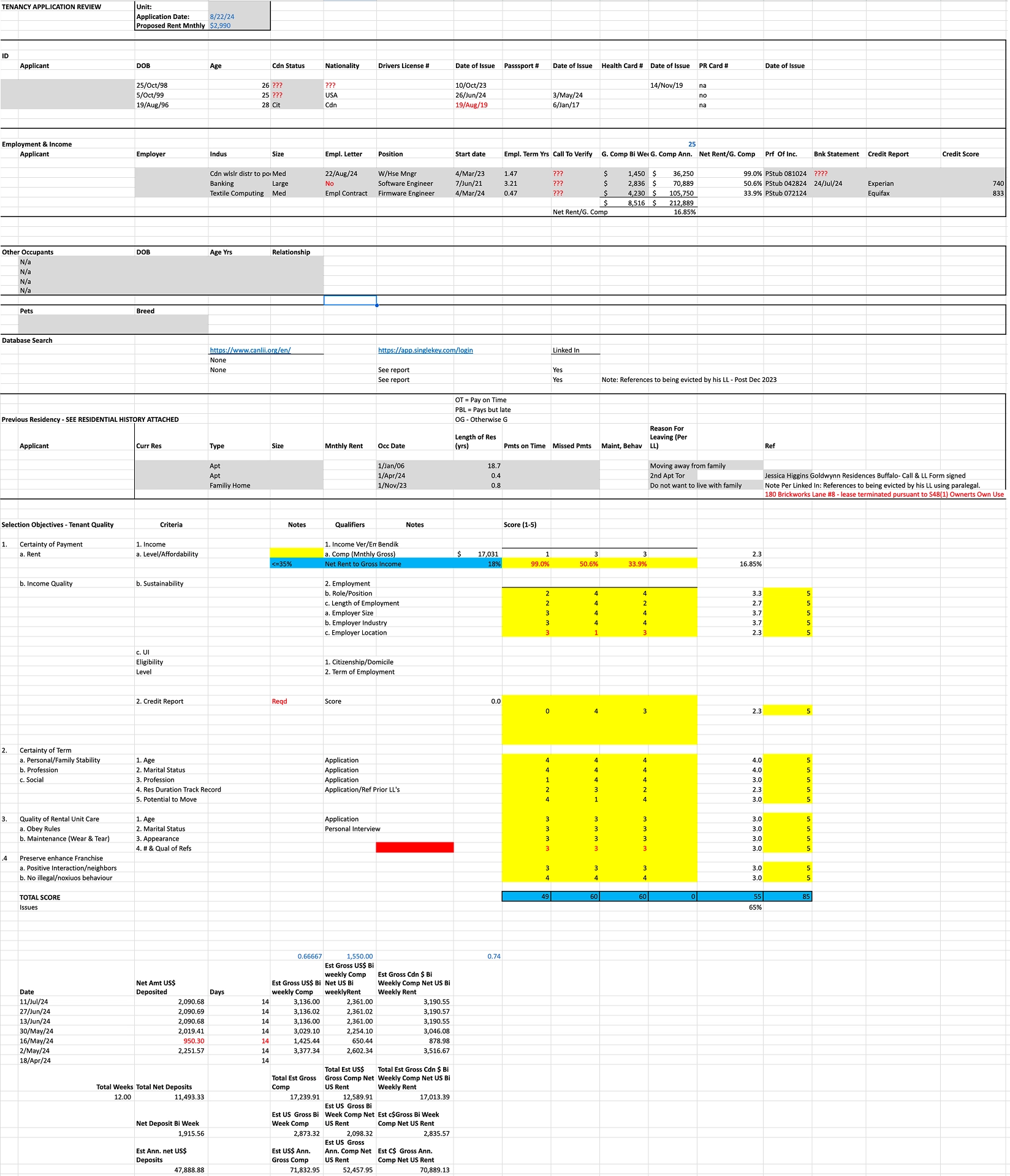
Most relied on spreadsheets, email threads, Facebook messages, phone calls, and PDFs to assemble a decision. Verification was the biggest pain point. Employment, income, credit, and references required manual follow-up, and trust in tenant-submitted information was low.
Tenants described a parallel breakdown in trust. Hesitation was not about privacy in principle, but legitimacy. When the process felt professional, structured, and transparent, willingness to engage increased significantly.
This was not a listing problem. It was a trust and signal-quality problem.
Through early workshops and user research, I transformed a broad, emotionally charged problem into a clearly defined trust and screening challenge with explicit risks and guiding principles.
Defining The Problem
Landlords and tenants lack a reliable way to establish trust early in the rental process. Landlords spend significant time manually verifying information and comparing applicants using fragmented tools, while tenants repeatedly share sensitive data without clear signals of legitimacy or transparency. Existing solutions optimize for exposure and volume, but fail to support secure verification, explainable evaluation, and mutual confidence.
LANDLORDS
WHY I WANT IT:
PAIN POINT
I need everything in one place so I can quickly compare applicants without juggling spreadsheets and messages.
MANUAL SCREENING
I want confidence that what I’m reviewing is accurate before I commit to a tenant.
LOW TRUST
I don’t want more applications. I want applicants who actually meet my requirements.
POOR FIT
This decision has long-term consequences. I need to feel confident before I say yes.
HIGH RISK
TENANTS
WHY I WANT IT:
PAIN POINT
I want to know who I’m sharing my information with and that it’s being handled properly.
DATA SAFETY
I’m tired of uploading the same documents over and over for every application.
REPETITION FATIGUE
I want to know upfront what the landlord is actually looking for before I apply.
UNCLEAR EXPECTATIONS
I want to feel confident the listing and landlord are real before I share anything personal.
LEGITIMACY CONCERNS
Ask The Right Questions
From this synthesis, four guiding questions shaped the design work:
How might we help landlords evaluate applicants quickly without relying on manual, fragmented workflows?
Pain Points:
How might we establish trust in applicant information without removing landlord judgment or tenant control?
Pain Points:
How might we surface clearer signals of fit so landlords receive fewer, higher-quality applications?
Pain Points:
How might we reduce repetitive effort for tenants while maintaining transparency and fairness in the application process?
Pain Points:
Design and Validation Approach
Design and validation progressed in parallel to reduce risk early.
I began with low-fidelity flows to test structure and decision logic before investing in visual detail. Once the core flows held up, I moved into higher-fidelity prototypes to validate usability, clarity, and trust signals.
Moderated usability tests focused on three critical moments: creating a listing, applying as a tenant, and reviewing applicants. Feedback was synthesized quickly and fed back into the design.
Each design decision directly responded to the questions defined during synthesis.
Landlords were already comparing applicants manually. I designed the product around a single comparison surface rather than introducing a new abstraction.
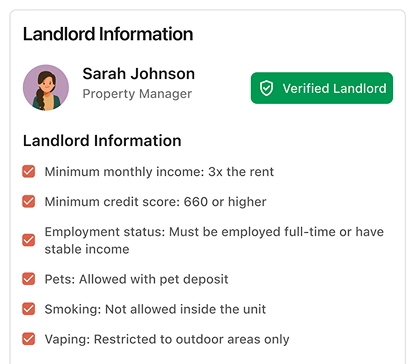
Applicants live within listings. Review states replaced informal favouriting. Core signals such as income range, credit band, employment status, and move-in date are visible at a glance.
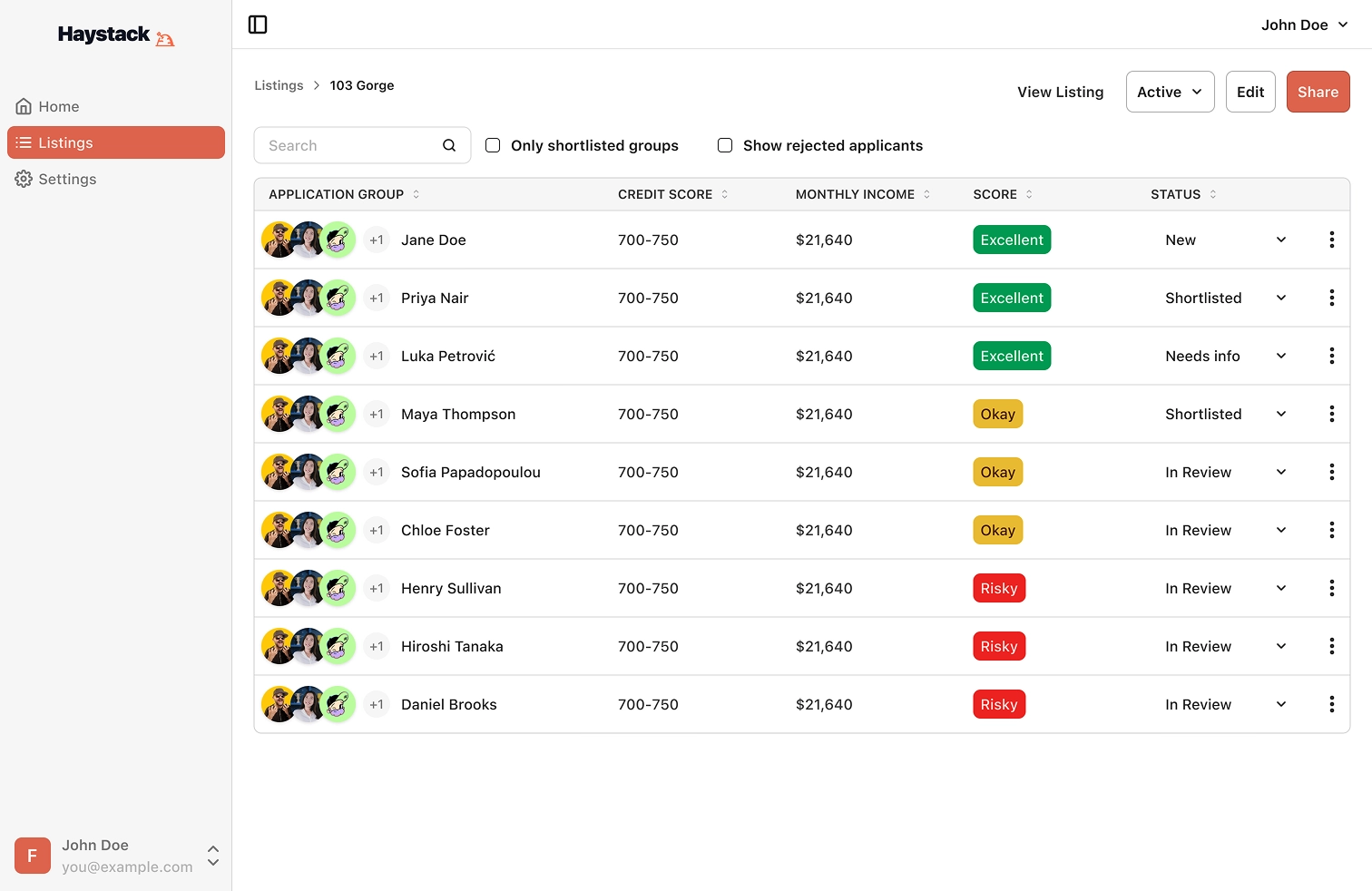
Existing platforms optimize for exposure. Landlords wanted relevance.
Listing creation shifted from descriptive to declarative. Landlords define clear requirements upfront, supported by guidance and suggested ranges. These requirements act as an early filter, reducing poor-fit applications before they happen.
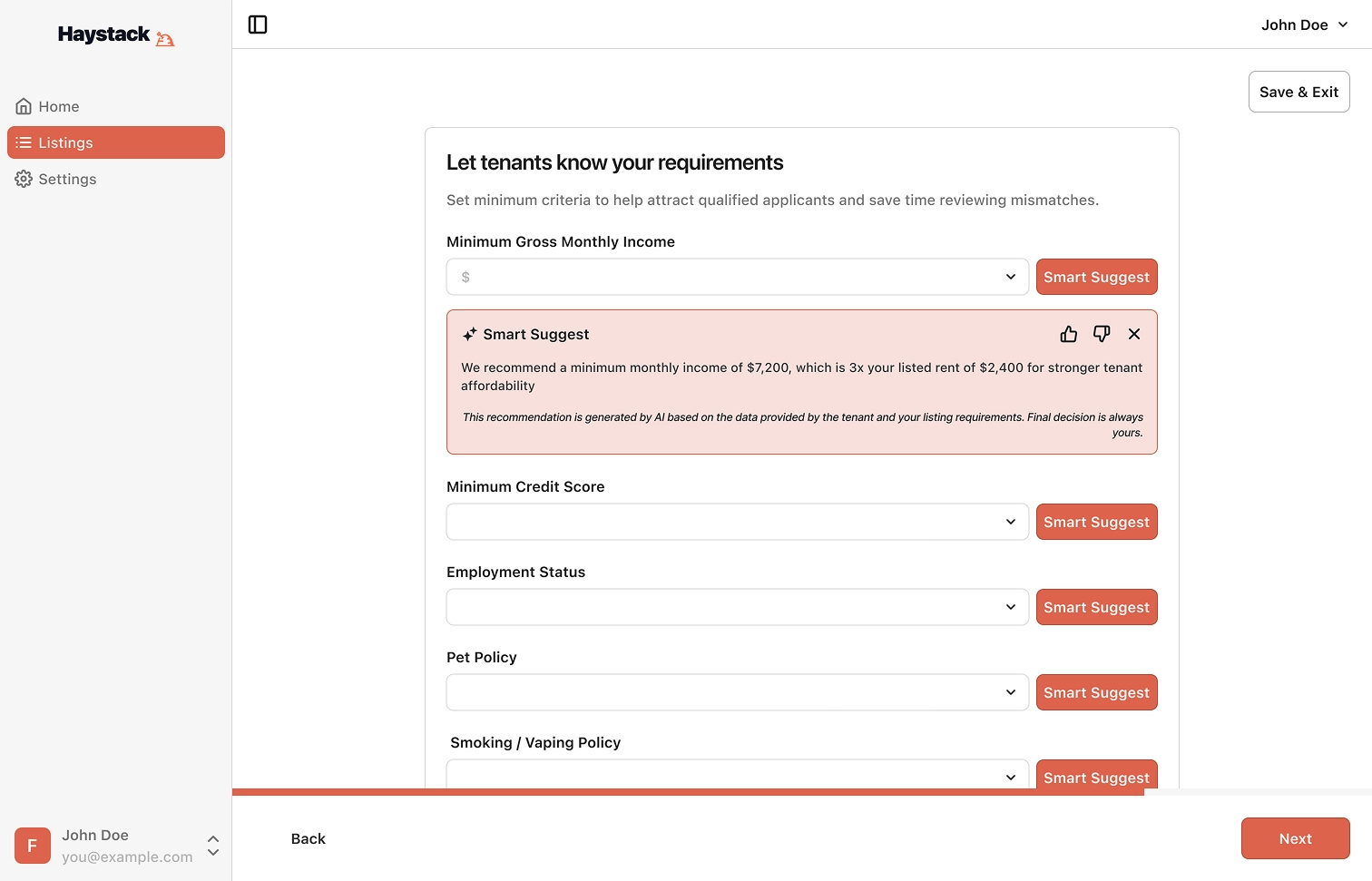
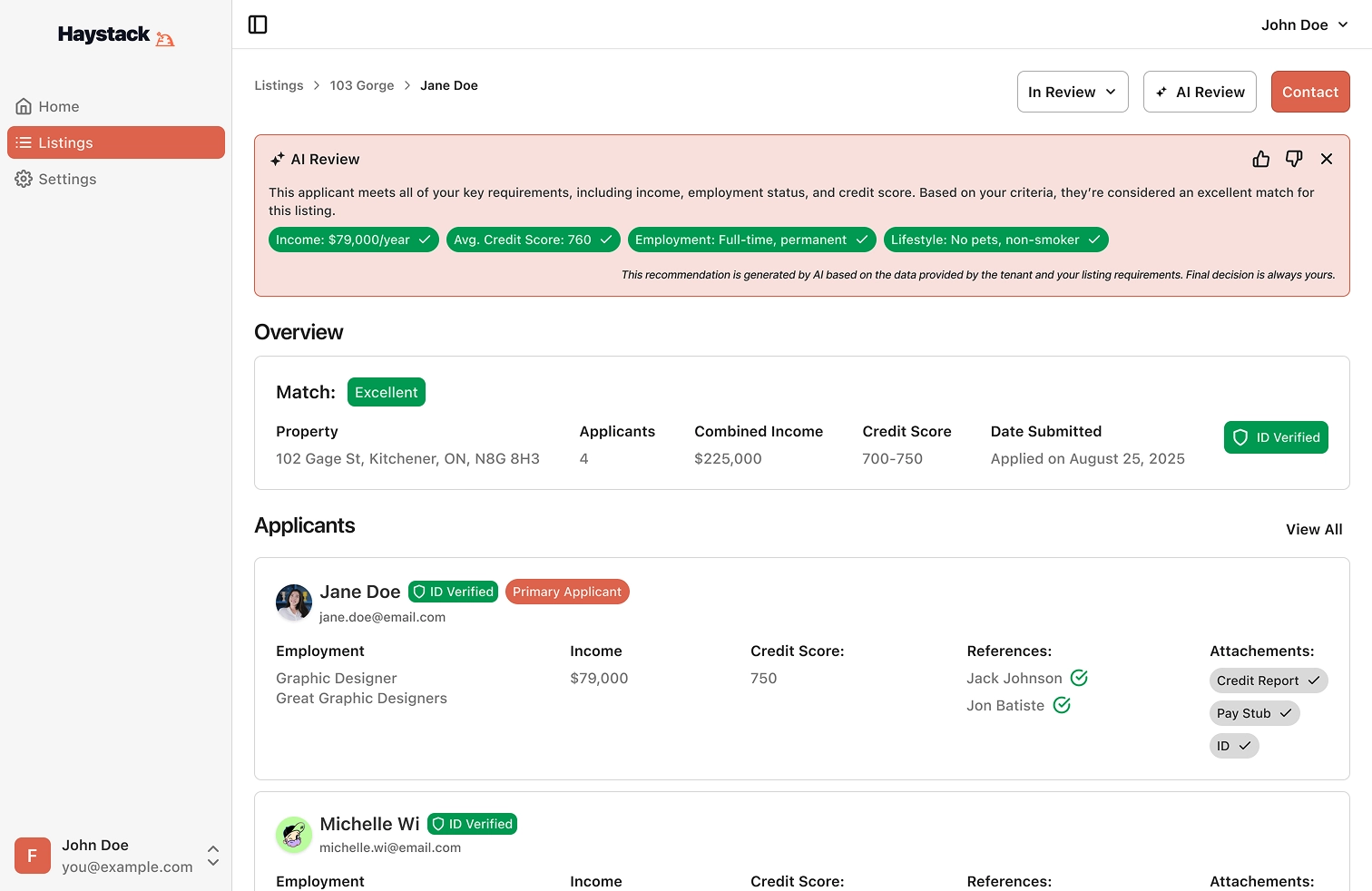
Trust could not be solved with a score alone.
AI insights are framed as guidance, not decisions. Summaries explain why an applicant appears strong or risky without prescribing an outcome. Language reinforces that final judgment remains human.
Tenants share information progressively, with clear explanations for why data is requested and how it will be used.
Tenants were frustrated by repeatedly uploading the same documents.
The tenant experience is built around a reusable profile rather than one-off applications. A completeness indicator communicates progress and encourages incremental completion. Reuse reduces friction. Visibility preserves trust.
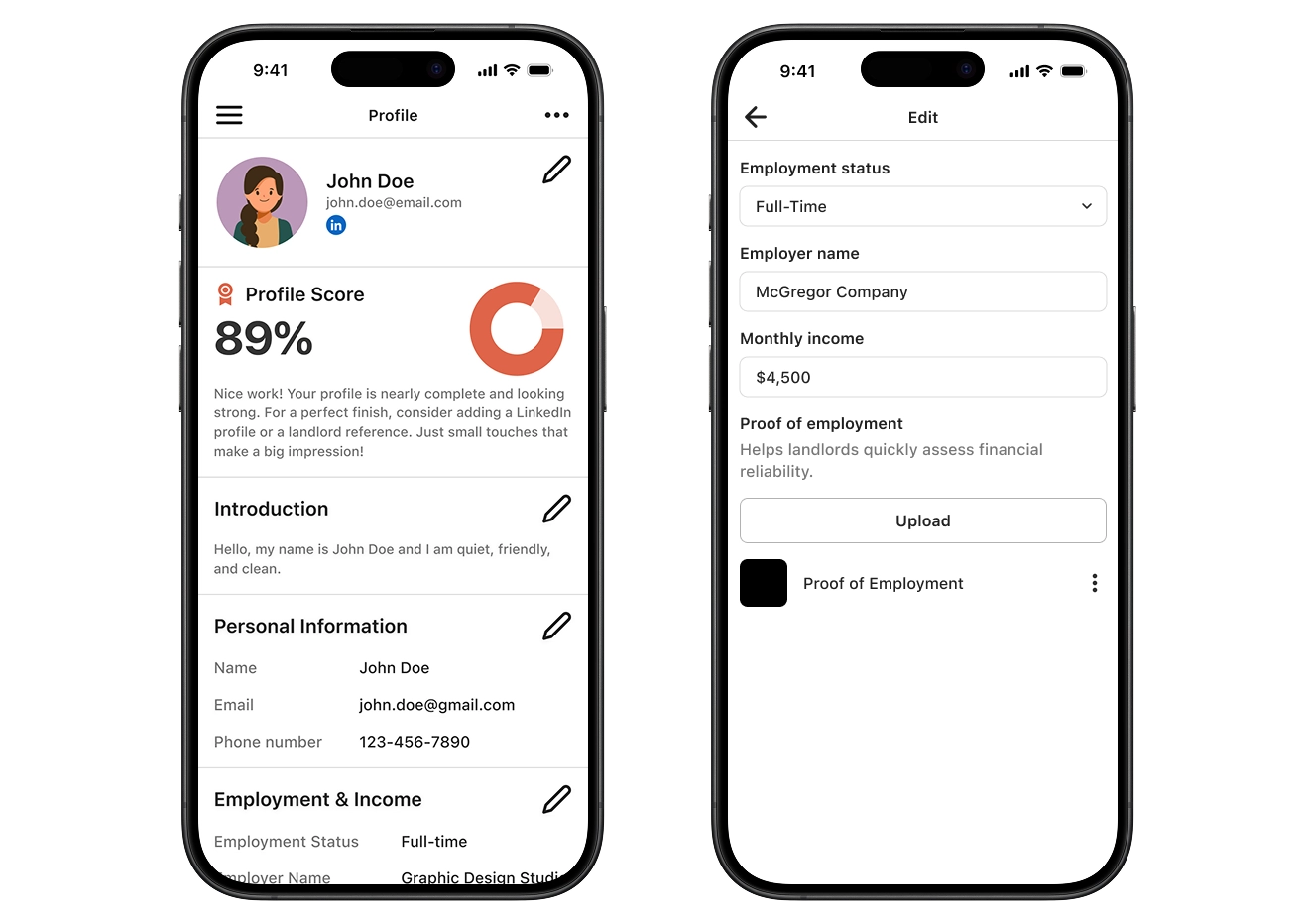
Tenants were frustrated by repeatedly uploading the same documents for every application. At the same time, they wanted control over where their information went.
I designed the tenant experience around a reusable profile rather than one-off applications. A completeness indicator communicates progress and value, encouraging incremental completion. Profiles can be shared across listings without resubmitting information.
Reuse reduces friction, while visibility and control preserve trust in a system with inherent power imbalance.

Impact
Validated a trust-first approach to rental screening with both landlords and tenants
Multiple landlords stated they would list properties immediately upon launch, including one managing over 20 student rentals
Shifted screening from fragmented, manual workflows to a structured comparison model
Established a clear MVP thesis that aligned user needs, business goals, and technical feasibility
Handoff and Current State
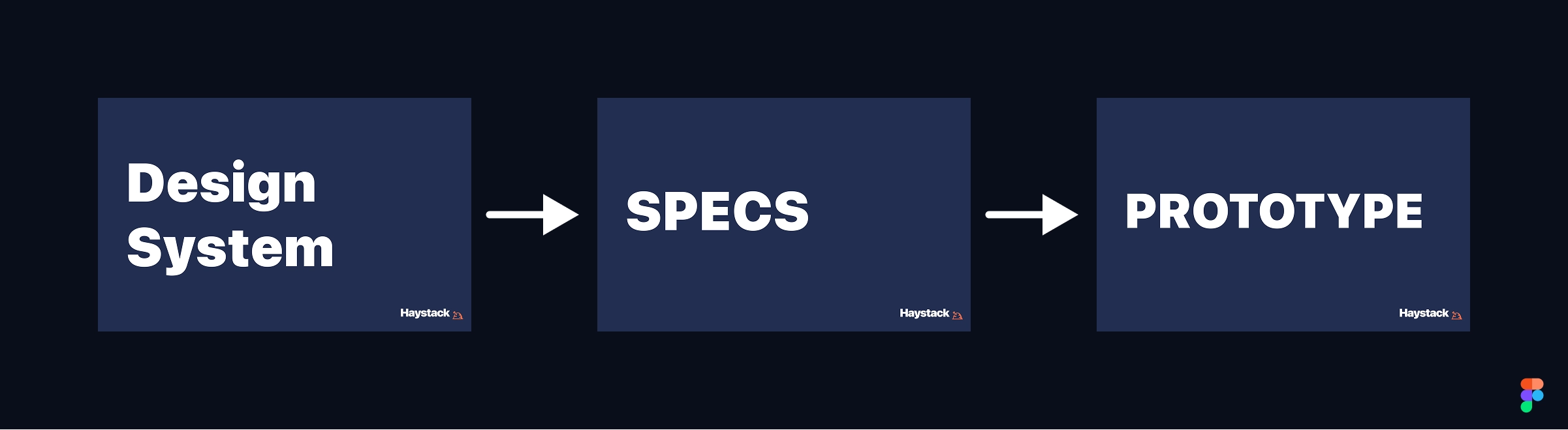
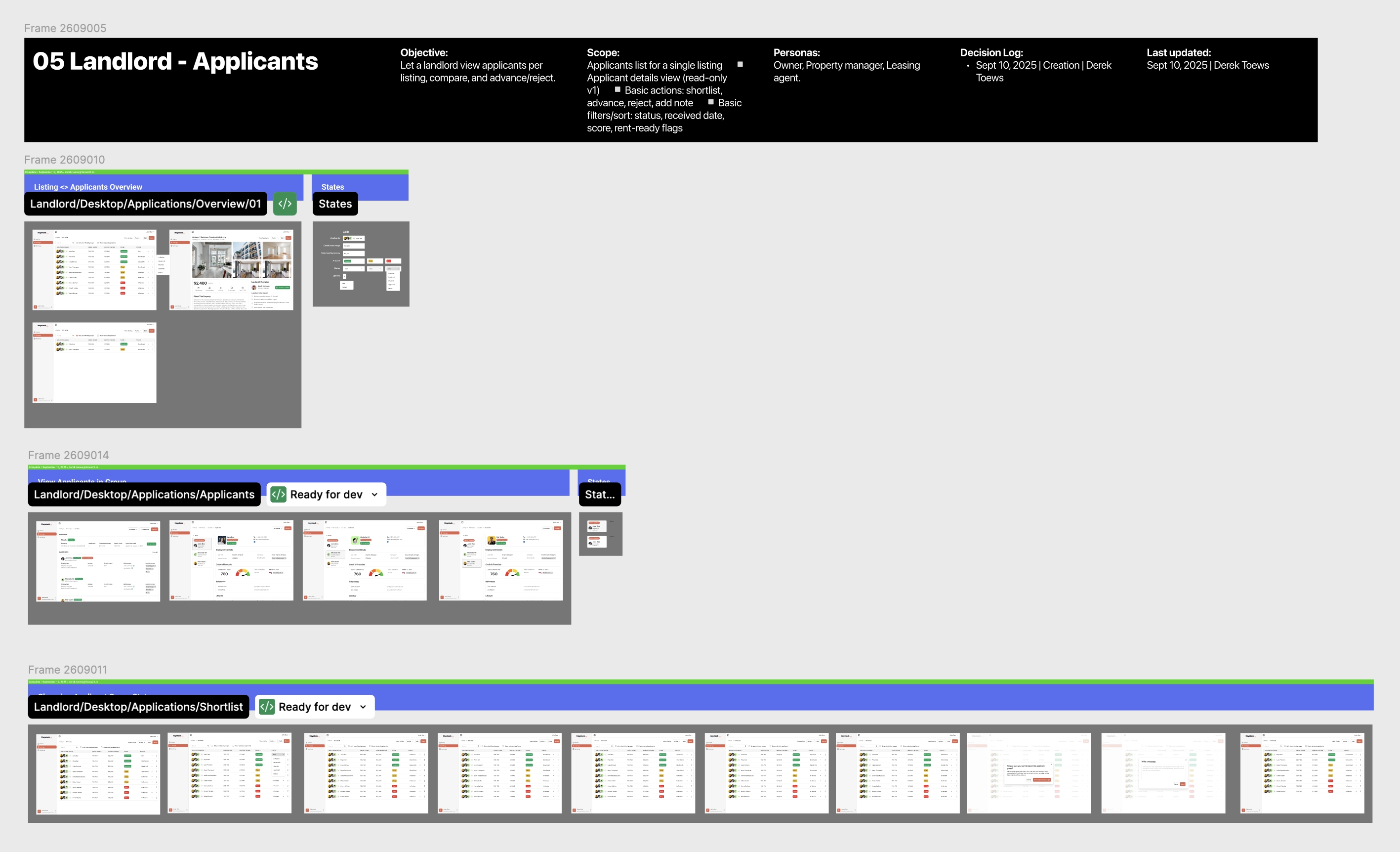
I delivered a component-based design system, annotated mobile and desktop specifications, detailed user flows, accessibility notes, and a fully clickable end-to-end prototype.
These artifacts serve as the source of truth for development and support parallel build using AI-assisted tooling.
The MVP is currently in active development using Cursor and Claude, with continued design support as features are implemented and validated.
Next Project: