


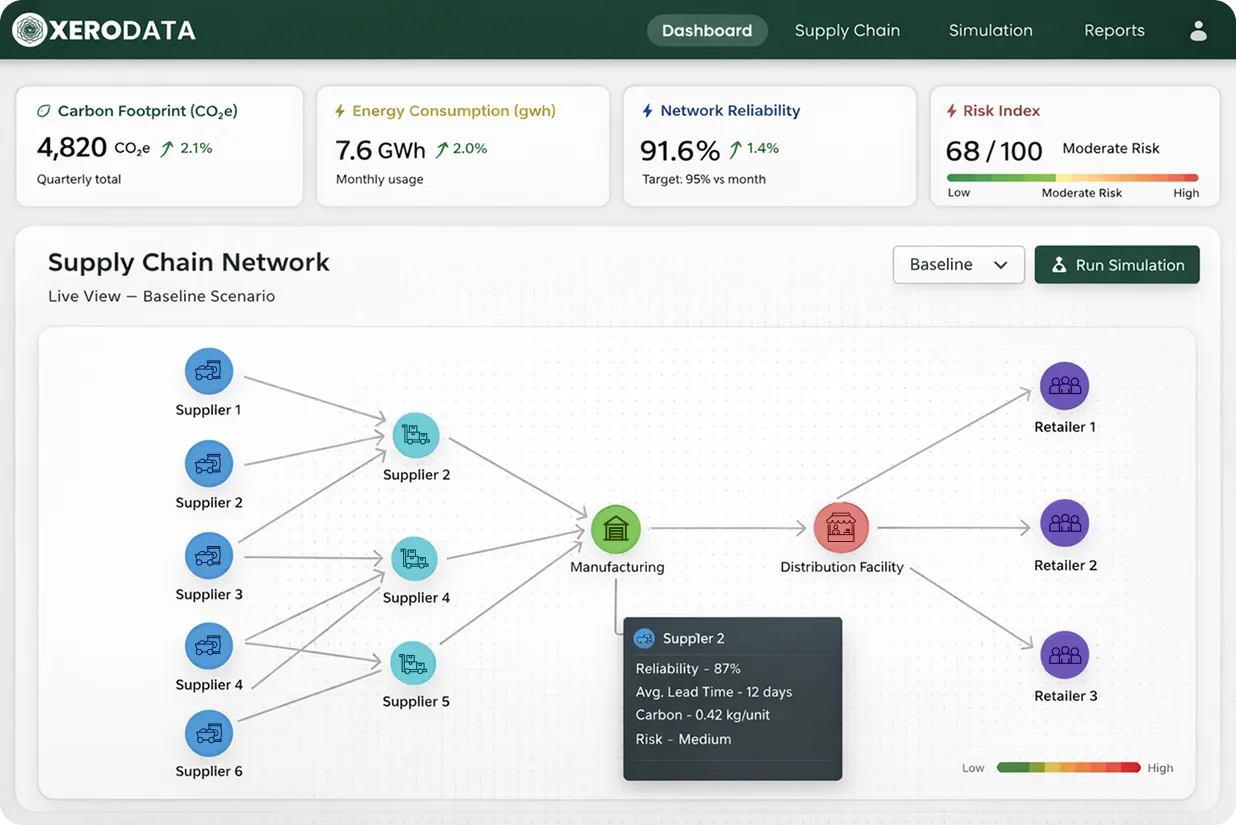
XeroData is a SaaS platform built to help organizations simulate and analyze supply chain disruptions using agent-based modeling.
Background
XeroData is a SaaS platform built to help organizations simulate and analyze supply chain disruptions using agent-based modeling. During my time at Focus21, I was brought in as the UI and UX Designer for an 18-week engagement to help shape the product’s initial experience and interface system. I worked alongside a senior developer, a DevOps project manager, and subject matter experts to translate a technically sophisticated modeling engine into a usable, modern web application for both commercial and academic users.
Problems Solved
Supply chain managers face disruptions that cannot be easily planned for, from global events like COVID-19 to geopolitical instability and shipping crises. Existing ERP and analytics tools focus heavily on historical trends and often overpromise on AI, but they lack the ability to simulate brand new scenarios or experiment with rule changes.
Through empathy mapping and persona work, we identified two primary users: experienced supply chain managers seeking contingency planning and cost optimization, and academics who needed granular modeling tools that were rigorous yet visually communicable. The challenge was to design a platform that could handle complex simulations and data integrations without becoming intimidating or visually dated.
The Solution
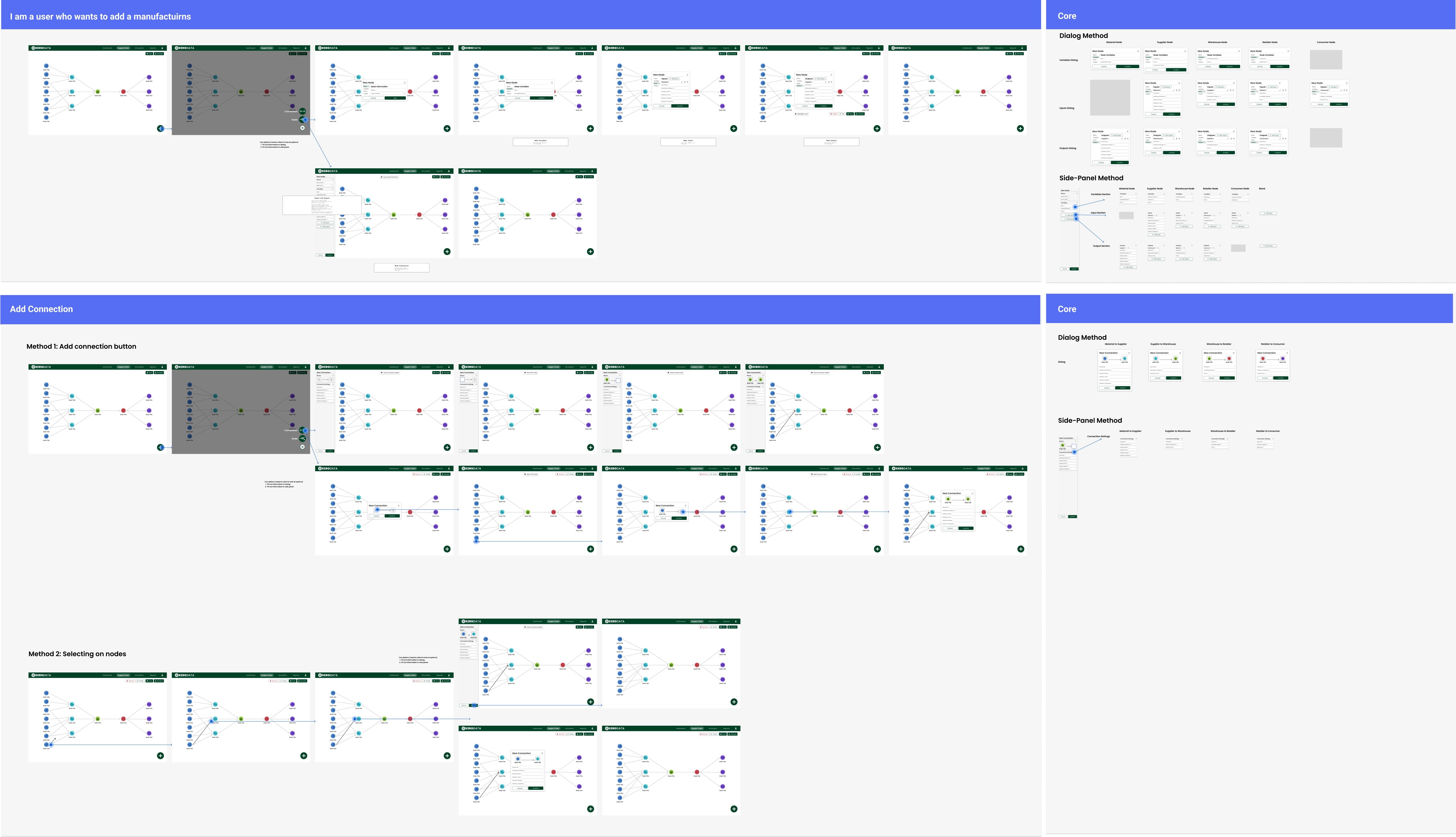
I designed a dashboard-driven interface centered around scenario simulation and rule-based experimentation. The experience emphasized clarity in network visualizations, controllable simulation inputs, and structured outputs such as delivery timelines, cost impact, inventory levels, and carbon metrics.
We focused on information hierarchy, modular data controls, and a clean visual system that felt sleek and forward-looking while maintaining credibility. The goal was to make experimentation feel intentional and controlled rather than abstract or overwhelming. By reframing agent-based modeling as an accessible decision-support tool, the platform positioned itself as a principled way to react to unprecedented events rather than relying solely on historical data or hype-driven forecasting.
Team
DevOps, Full Stack Developer, Project Manager, UI/UX Designer
Next Project: